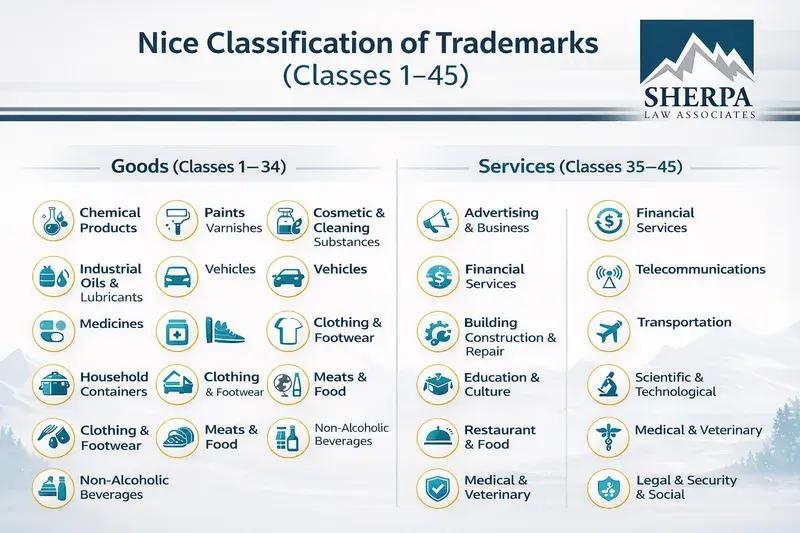

Trademark protection begins with correct classification. Under international trademark practice, including in Nepal, goods and services are classified according to the Nice Classification (NCL) system developed and administered by the World Intellectual Property Organization (WIPO).
The Nice Classification provides a uniform global standard for categorizing goods and services for trademark registration. Nepal, through the Department of Industry (DOI), follows this classification framework while examining trademark applications.
At Sherpa Law Associates, we regularly advise businesses, startups, and multinational entities on selecting the correct Nice Classes, a step that is critical to securing enforceable trademark rights.
What Is the Nice Classification?
The Nice Classification (NCL) is an internationally recognized system that divides goods and services into 45 distinct classes:
- Classes 1–34: Goods
- Classes 35–45: Services
Each class is accompanied by:
- Class headings (general description), and
- Explanatory notes that clarify inclusions and exclusions.
The currently applicable version (as referenced) is Nice Classification, 13th Edition (2026 Jan 1 onwards).
Why Nice Classification Matters in Trademark Registration
Correct classification is not a procedural formality—it determines the scope of legal protection.
An error in class selection may result in:
- Partial or complete refusal of the trademark application
- Weak enforcement rights
- Inability to stop infringers operating in relevant business areas
- Future conflicts during brand expansion
In Nepal, trademarks are protected only in the classes applied for and approved, making strategic class selection essential.
Overview of Trademark Classes
Goods (Classes 1–34)
These classes cover tangible products, including but not limited to:
- Class 1 – Chemicals used in industry, science, and agriculture
- Class 3 – Cosmetics, soaps, and cleaning preparations
- Class 5 – Pharmaceuticals and medical preparations
- Class 9 – Scientific, optical, and electronic devices
- Class 16 – Paper goods, printed matter, stationery
- Class 25 – Clothing, footwear, headgear
- Class 30 – Coffee, tea, spices, bakery products
- Class 32 – Non-alcoholic beverages
- Class 33 – Alcoholic beverages (excluding beer)
- Class 34 – Tobacco products
Services (Classes 35–45)
Service-based businesses must register under these classes:
- Class 35 – Advertising, marketing, business management
- Class 36 – Financial, insurance, and real estate services
- Class 37 – Construction and repair services
- Class 38 – Telecommunications
- Class 41 – Education, training, entertainment
- Class 42 – Scientific, technological, and IT services
- Class 43 – Restaurants, hotels, hospitality services
- Class 44 – Medical, veterinary, wellness services
- Class 45 – Legal, security, and personal services
Class Headings vs Actual Goods & Services
A common misconception is that registering under a class heading automatically covers everything in that class. In practice:
- Authorities examine the specific goods/services description
- Overly broad or vague terms may be objected to
- Precise drafting aligned with WIPO explanatory notes is required
This is where professional legal drafting makes a significant difference.
Multi-Class Trademark Applications
Businesses often operate across multiple verticals. For example:
- A restaurant brand may require Class 43 (services) and Class 30 (packaged food products)
- A fintech company may require Class 36 and Class 42
Strategic multi-class filing ensures:
- Broader protection
- Reduced future refiling costs
- Stronger brand enforcement
Nice Classification in Nepal: Practical Considerations
While Nepal is not a party to the Madrid Protocol, its trademark examination system aligns with the Nice Classification.
However:
- Local examination practices apply
- Transliteration, descriptiveness, and class clarity are strictly reviewed
At Sherpa Law Associates, we ensure international compliance with local enforceability.
How Sherpa Law Associates Can Help
Our trademark services include:
- Class identification and risk assessment
- Drafting precise goods and services descriptions
- Filing and prosecution before the Department of Industry
- Objection handling and opposition proceedings
- Trademark portfolio management and enforcement
Choosing the correct Nice class is not just technical—it is strategic.
If you need any help, Sherpa Law Associates is there for your expert guidance on trademark registration, brand protection, and IP strategy in Nepal.